


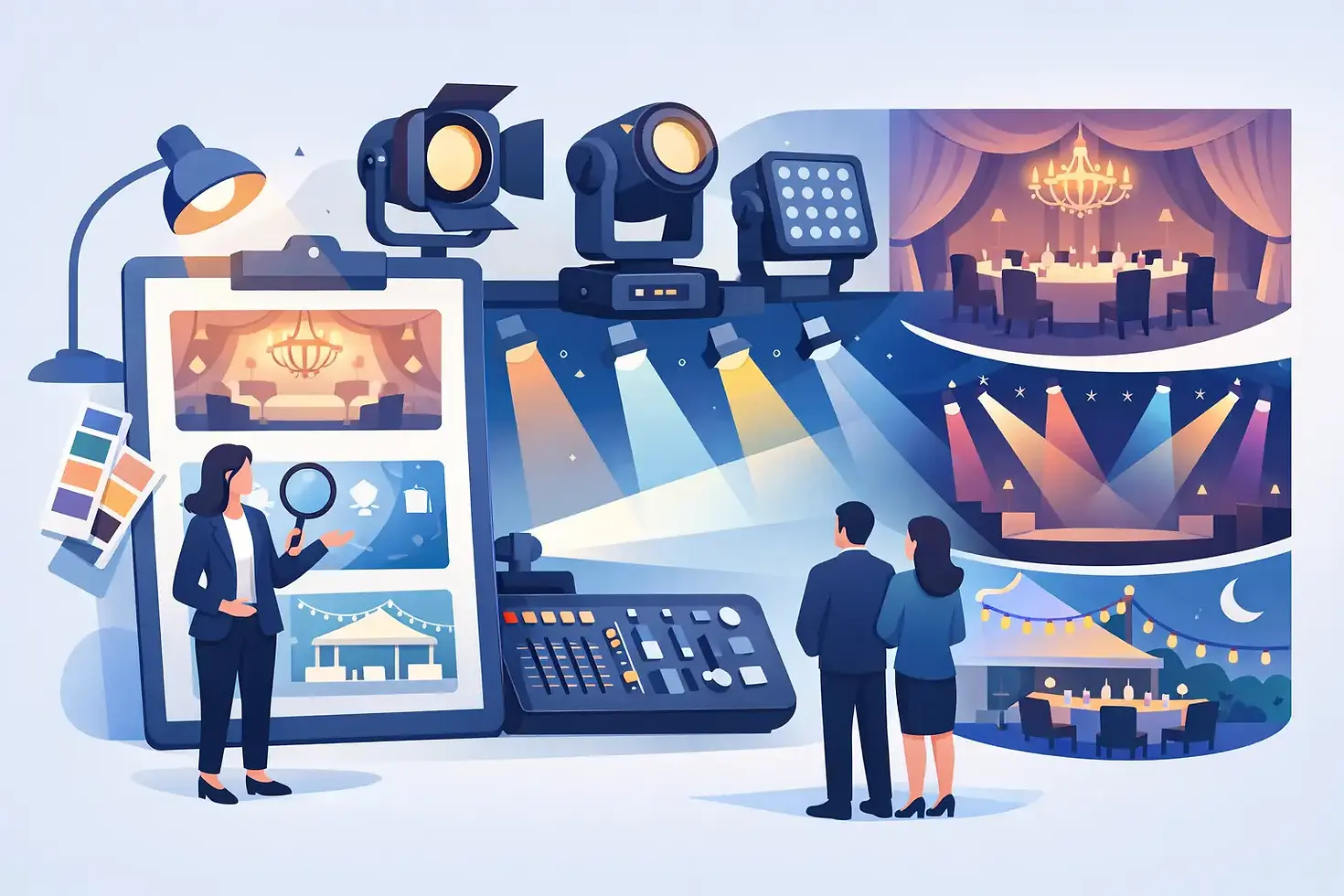
How to Select Event Lighting for Any Venue
A ballroom can look ordinary at 3:00 p.m. and extraordinary by dinner service. The difference is rarely the linens or centerpieces alone. Lighting determines what guests notice first, how they feel in the room, and whether your event looks as polished in person as it does in photos. Knowing how to select event lighting means making choices that support the purpose of your gathering, not simply adding color to the walls.
For a corporate awards dinner, lighting should focus attention on the stage and reinforce the brand. For a wedding, it should create warmth while keeping faces, florals, and key moments beautifully visible. For a product launch, it may need to build anticipation, reveal a product dramatically, and accommodate presentation content. The right plan is tailored to the room, run of show, guest experience, and production needs.
Start With the Event Experience You Want to Create
Before choosing fixtures, define what the lighting needs to accomplish. Ask how guests should feel upon arrival, where their attention should go, and which moments deserve a visual change. A formal gala may call for an elegant, layered look that becomes more energetic after dinner. A conference needs clear, comfortable lighting for note-taking, networking, and speaker visibility, with no harsh glare on screens.
Event lighting is not one decision made for the entire day. Consider the guest journey from registration through the final farewell. Entry lighting creates the first impression. Ambient lighting shapes the overall mood. Stage lighting protects the quality of speeches, performances, and photos. Dance-floor lighting signals a shift from programmed content to celebration.
A thoughtful brief should identify the event type, audience size, venue, agenda, brand colors, décor palette, entertainment, and any moments that need emphasis. This gives your production team a practical foundation instead of asking them to make broad assumptions from a color preference alone.
How to Select Event Lighting by Function
The most successful lighting plans layer several functions together. One fixture type cannot do every job well, especially in a large room or a program with multiple phases.
Ambient lighting sets the room tone
Ambient lighting is the base layer that allows guests to move comfortably, find their tables, and feel connected to the environment. Warm white light often suits weddings, private dinners, and celebrations because it softens the space and complements skin tones. Cooler white light can feel clean and focused for conferences, training sessions, and technology-driven launches.
Dimmer control matters as much as the fixture itself. A room may need brighter levels for networking and dining, then lower levels for an awards reveal or live performance. If the venue only offers fixed overhead lighting, adding controlled ambient layers can make a major difference.
Uplighting adds depth and brand presence
Uplighting places light along walls, columns, draping, or architectural features. It is one of the most effective ways to transform a plain venue without overwhelming the room. Soft amber, champagne, or blush tones can elevate a reception. Corporate brand colors can be used strategically at entry points, behind the stage, or in networking zones.
The trade-off is restraint. Saturating every wall in intense color can make a room feel smaller, distort food and skin tones, and compete with stage visuals. Use color where it has a purpose, then balance it with clean white light where guests need clarity.
Stage lighting protects the program
If there is a stage, there should be a plan for the people on it. Speakers, emcees, award recipients, musicians, and dancers need even front light so guests can see expressions and cameras can capture them well. Backlight and side light add dimension, but they should support, not replace, front lighting.
Avoid placing strong fixtures directly behind presenters without adequate front fill. That setup may look dramatic from the back of the room while leaving faces dark in photographs and video. For corporate events, clear visibility is part of professional presentation. For private celebrations, it protects the memories guests will revisit for years.
Moving lights create energy for key moments
Moving lights can add motion, texture, and excitement for entrances, product reveals, performances, and dance floors. They are especially effective when they are programmed to match the run of show. A well-timed lighting cue can make an award winner’s walk to the stage feel significant or turn a room from dinner-ready to party-ready within seconds.
They are not necessary for every event. In an intimate dinner or daytime gathering, subtle architectural lighting may be more appropriate. The goal is to match the level of production to the occasion, not add effects because they are available.
Evaluate the Venue Before Finalizing Your Plan
Venue conditions shape every lighting decision. Visit the space, or review detailed photos and floor plans, before committing to a design. Ceiling height, wall color, windows, built-in fixtures, power access, load-in routes, and rigging permissions all affect what can be achieved.
A high-ceiling ballroom can absorb light and may need more powerful fixtures or carefully positioned truss. A tented event needs consideration for power distribution, weather protection, and safe cable management. A venue with floor-to-ceiling windows may require a different approach for a daytime program than for an evening reception after sunset.
Pay attention to surfaces. Dark carpeting and black drape absorb light, while white walls, mirrored panels, and glossy floors reflect it. A room with strong existing chandeliers may need complementary accents rather than a complete replacement of its character. If you are using LED screens, test for camera exposure and screen glare before event day.
Plan for Photos, Video, and Guest Comfort
Lighting that looks striking to the eye can still fail on camera. This matters for events with professional photography, livestreaming, social content, or a brand that expects polished post-event assets. Ask for lighting that flatters people, keeps the stage evenly lit, and allows cameras to capture décor without excessive shadows.
Color temperature is particularly important. Mixing very warm and very cool white sources can make skin tones look inconsistent. Colored lighting is excellent for atmosphere, but it should not be the only light on faces during speeches, ceremonies, or award presentations.
Guest comfort deserves equal attention. Avoid placing high-output fixtures where they shine directly into seated guests’ eyes. Limit strobe effects, especially at mixed-age events or gatherings where guests may be sensitive to flashing light. Keep pathways, exits, stairs, and registration areas safely illuminated throughout the program, even when the room is dimmed for a dramatic moment.
Coordinate Lighting With Décor, AV, and Entertainment
Lighting should be designed alongside the rest of the production, not after décor, staging, and entertainment have already been selected. A floral installation may need focused pin spotting to show its texture. A custom backdrop may require an even wash of light. A DJ, band, or dance performance needs enough visual energy without conflicting with the stage program.
For branded events, coordinate the lighting palette with presentation templates, scenic elements, table details, and LED screen content. Exact logo colors do not always translate perfectly in light, so test shades in the venue rather than relying on a digital mockup. A slightly adjusted hue can look closer to the intended brand color in the actual room.
Timing is also part of coordination. Build lighting cues into the show flow for entrances, videos, speaker walk-ons, toasts, awards, and entertainment transitions. When lighting, audio, video, and stage management are aligned, the program feels controlled and intentional rather than improvised.
Set a Budget That Prioritizes What Guests Will Notice
Lighting budgets vary widely based on venue size, ceiling height, fixture quantity, labor, programming, power needs, and event duration. Rather than choosing the lowest fixture count, prioritize the areas that influence the guest experience most: arrival, stage, dining environment, branded focal points, and the final celebration period.
If the budget is limited, invest first in reliable stage lighting and a strong ambient plan. Then add uplighting or pin spotting where it will have the greatest visual impact. Complex moving effects and specialty fixtures can be added when they serve a defined moment. A smaller, well-executed design is more effective than an ambitious plan that leaves the stage dark or the room unevenly lit.
An experienced event partner can also help prevent costly gaps, such as insufficient power, last-minute labor needs, or décor that blocks essential fixtures. At L&L Event Planner, lighting is considered as part of the full event environment, with production choices coordinated around the experience you want guests to remember.
Ask the Right Questions Before Event Day
Before approving a lighting plan, confirm who is responsible for design, setup, programming, operation, and strike. Review where fixtures will be positioned, how cables will be secured, and whether the venue has restrictions on haze, rigging, or power use. Ask to see a simple lighting plot or visual concept for more complex events.
It is also wise to discuss backup planning. What happens if a fixture fails, a power circuit is unavailable, or the schedule changes? A dependable production team anticipates these details and builds enough flexibility into the plan to keep the event looking its best.
The right lighting does more than decorate a room. It gives your program focus, makes guests feel considered, and turns important moments into experiences with real presence. Begin with the feeling you want to create, then let every fixture, color, and cue earn its place.


Comments